The long-term memory your AI needs.
Start building with memory.

Kawa Code records the decisions, intent, and reasoning behind your code —
so both humans and AI assistants can understand why a system exists,
not just what the code looks like.

5x
Development Speed
30%
Review Time
100%
Decision Traceability

The Problem

AI tools generate code quickly, but they also forget. Developing a project over weeks or months inevitably blind-sides your AI. This leads to unnecessary rounds of troubleshooting and rework.

Context is lost

  • × "Why was this architecture chosen?"
  • × "Why did we reject alternative approaches?"
  • × "What assumptions drove this design?"

Decisions disappear in

  • × Slack threads
  • × Ephemeral AI prompts
  • × Lost documentation
  • × Commit messages that lack reasoning

The software industry built incredible tools for writing code.
But we never built a system for remembering decisions.


The Missing Layer: Memory

AI systems operate almost entirely in the present — stateless interactions, short context windows, reasoning that vanishes after each session.

reasoning disappears decisions are repeated architecture drifts teams lose alignment

Kawa Code introduces a new primitive for development:

intent /ɪnˈtɛnt/ noun

The decision and reasoning behind a code change.

Instead of storing only code, Kawa Code stores the thought process that produced it.


What Kawa Code Does

Kawa Code continuously records development intent during AI-assisted coding. It builds a long-term timeline of decisions that both developers and AI assistants can reference.

Understand

Previous architectural choices

Reuse

Earlier reasoning

Avoid

Repeating mistakes

One-shot

Higher quality code

Kawa Code turns development into a cumulative reasoning system
rather than a series of isolated prompts.


See It In Action

Real AI efficiency multiplier

One-minute demo

Watch how Kawa Code captures development intent in real time — recording decisions as they happen during AI-assisted coding sessions.

No workflow disruption. No manual documentation. Just quiet, continuous memory.
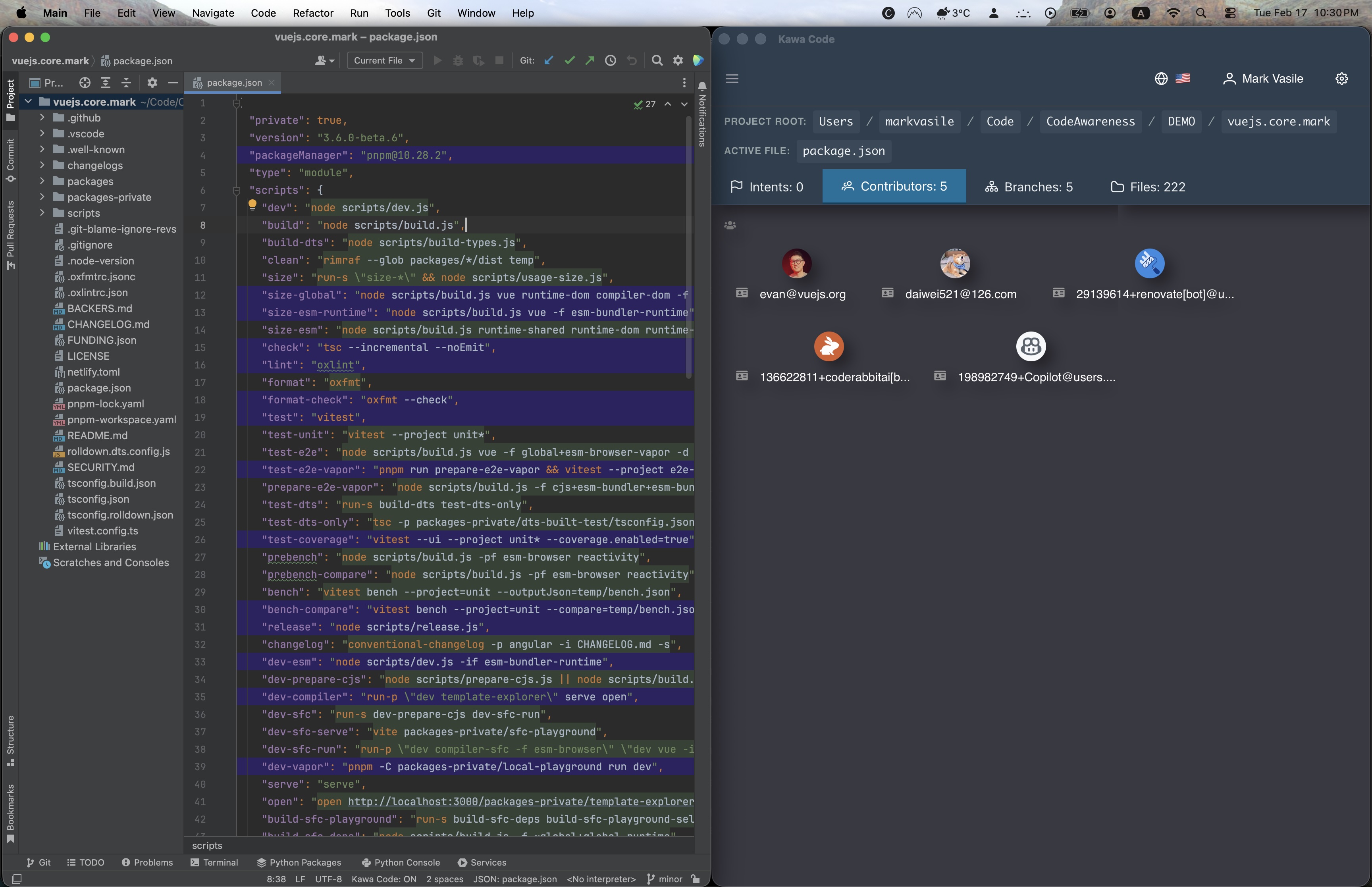
Kawa Code team collaboration in IntelliJ

Collaborative for both human and AI

Real-time teamwork visibility

See where teammates are working before changes are committed. Intersection detection highlights overlapping edits across your team — so you coordinate early, not at merge time.
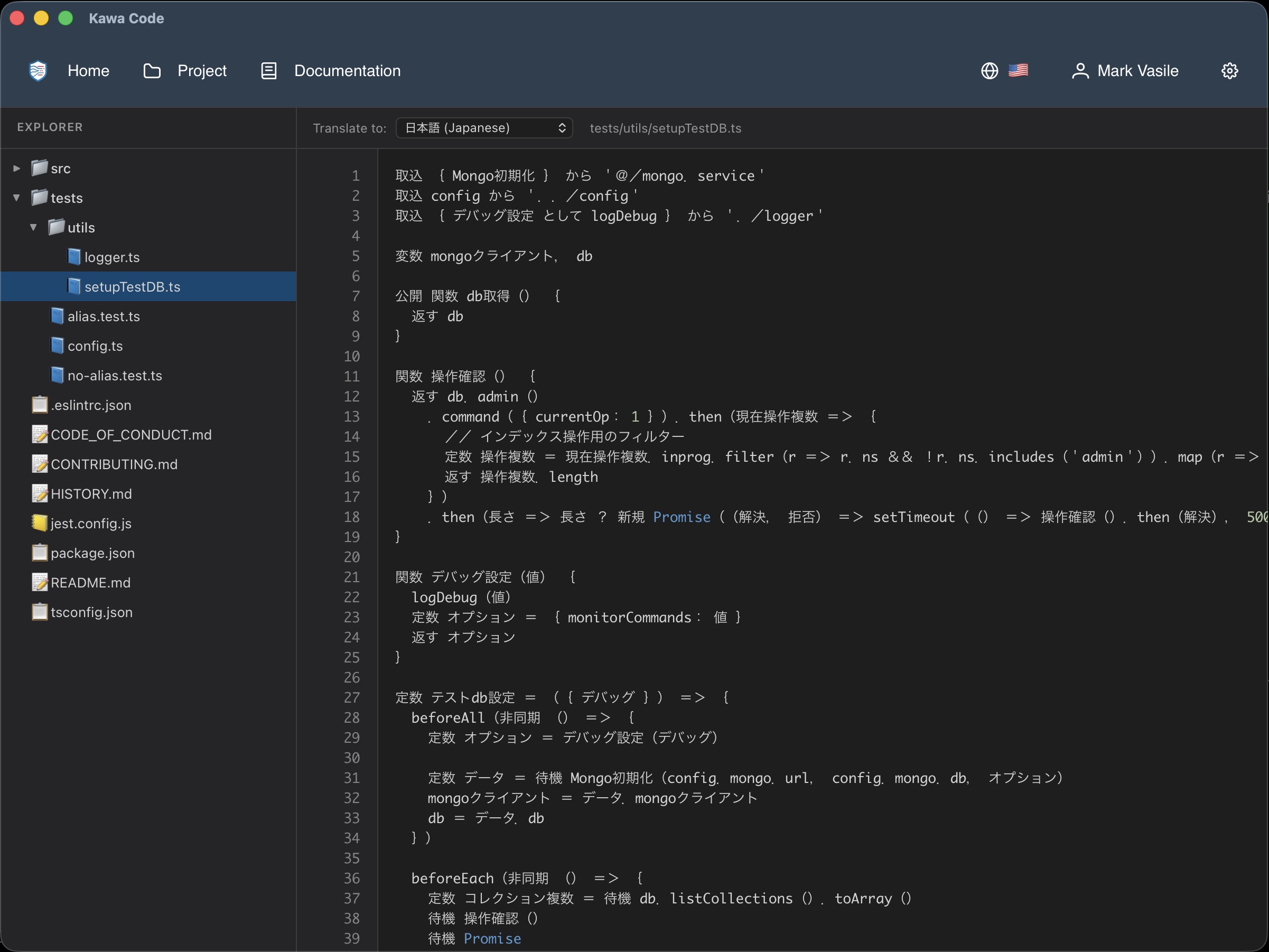
Kawa Code translating code into natural languages

Showing code in your native language

Open your doors to non-English speakers

All the code generated by AI or human contributors can be automatically translated into any human natural language, to make reading the code and validating logic available to anyone on the planet.


How It Works

Three steps to persistent reasoning.

1

Capture Intent

During development sessions with tools like Claude Code, Kawa Code records the decisions being made. Each intent may include:

  • Problem being solved
  • Reasoning behind the solution
  • Architectural tradeoffs
  • Code changes related to the decision
2

Build a Timeline

All intents form a chronological memory of the project — a searchable reasoning history of the codebase.

Instead of asking "Why is this code written this way?" — you can trace the decision that created it.
3

Improve AI Context

When generating code, Kawa Code automatically retrieves the most relevant prior intents. AI assistants gain historical context without requiring manual reconstruction.

Code quality Architectural consistency Development speed

Core Features

Decision Recording

Automatically records decisions made during AI prompting.

Intent Timeline

A chronological memory of project evolution.

AI Context Injection

Relevant past decisions are automatically supplied to AI assistants.

Branch & Diff Awareness

Understand why changes happened across branches.

Team Reasoning

Teams align around shared intent instead of fragmented documentation.

Multilingual Understanding

Translate code into your native language for better comprehension.


Plans


Security & Privacy

Kawa Code follows a zero-knowledge architecture.

Code blocks and diffs are encrypted client-side
The server stores encrypted data and cannot read your code
Organizations benefit from reasoning memory without exposing proprietary source code


Software development historically stores files, commits, pull requests.
But none of these capture why decisions were made.

Kawa Code introduces intent-driven development.

Instead of reconstructing context every time, teams accumulate reasoning over time.


Future software systems will be built by human-AI teams.
The limiting factor will not be code generation.

It will be shared understanding.

Kawa Code is building the memory layer for AI-native engineering.